
Updated: 02/10/2026
Background check laws in the United States vary by state, and these laws can affect what employers see, how far back criminal history is reported, and how certain records are treated during the hiring process.
This page provides general educational information to help people with criminal records better understand how background check reporting works. It is not legal advice.
Who This Page Is For
- People with felony or criminal records
- Job seekers concerned about background checks
- Individuals exploring expungement or record sealing
- Anyone trying to understand how state laws affect employment screening
States That Limit Reporting of Older Convictions
Some states restrict how far back certain criminal convictions can be reported, often around seven years (seven year states), with exceptions based on a number of factors including but not limited to:
- Job type
- Salary level – How much you make
- Industry (e.g., transportation, healthcare, security)
These limits do not erase convictions, but they may affect whether older offenses appear on standard background checks.
List of States That Restrict Background Checks
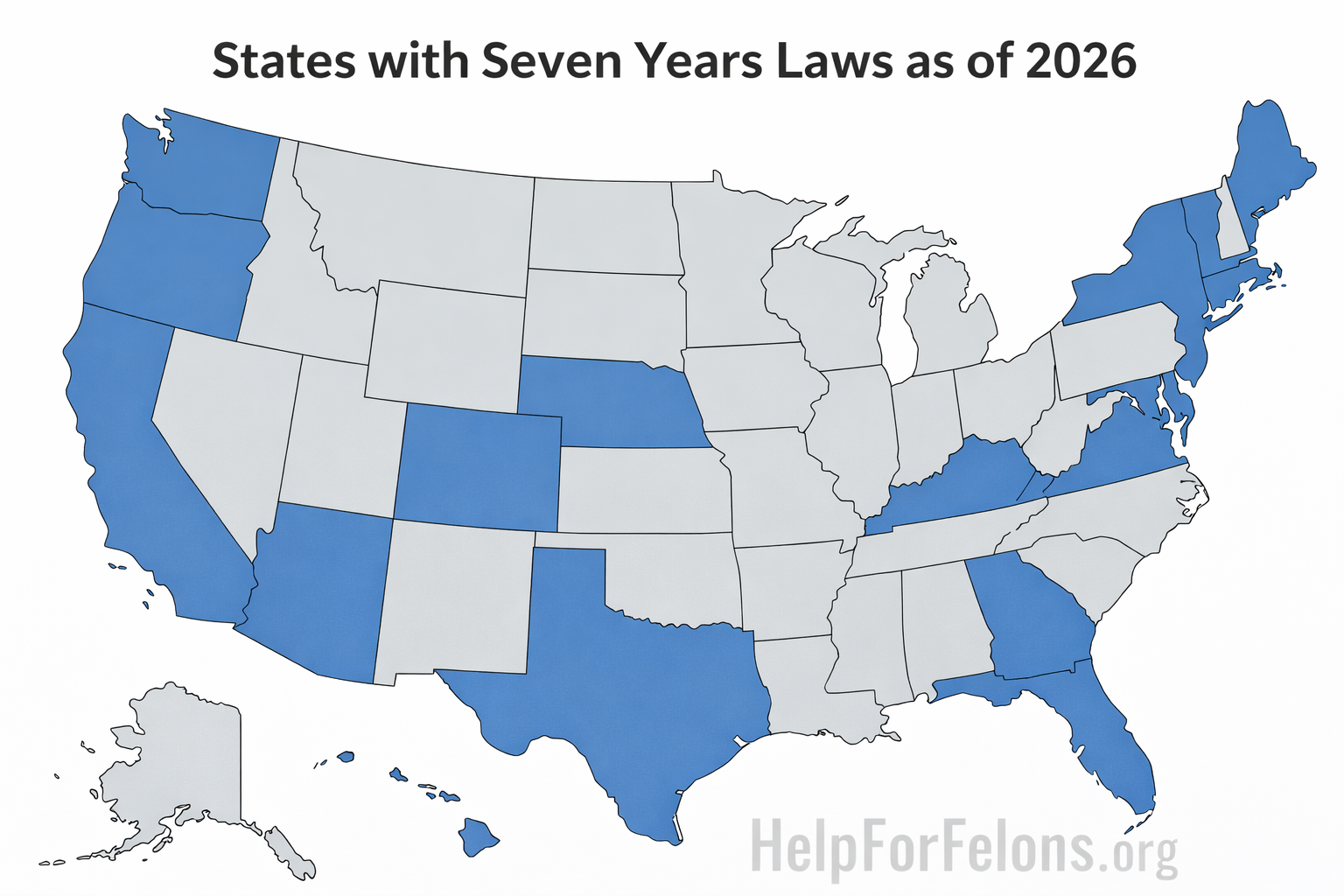
Note: This list was published on 02/10/2026. It is possible that state laws have been changed since. We will update this page frequently but please verify that your states law has not changed since we published this article.
The states listed below have seven year laws on the books.
- California
- Colorado
- Kansas
- Maryland
- Massachusetts
- Montana
- New Hampshire
- New Mexico
- New York
- Texas
- Washington
- Hawaii
You can find more information regarding specific state laws here regarding background checks (Seven Year States).
States That Restrict Reporting of Non-Convictions
In addition to seven year states there are states that will not report the following:
- Arrests that did not lead to conviction
- Charges that were dismissed
- Not-guilty verdicts
- Other court actions like bankrupcies
This can reduce the impact of older or unresolved cases during the hiring process.
Why This Matters for Job Seekers With Records
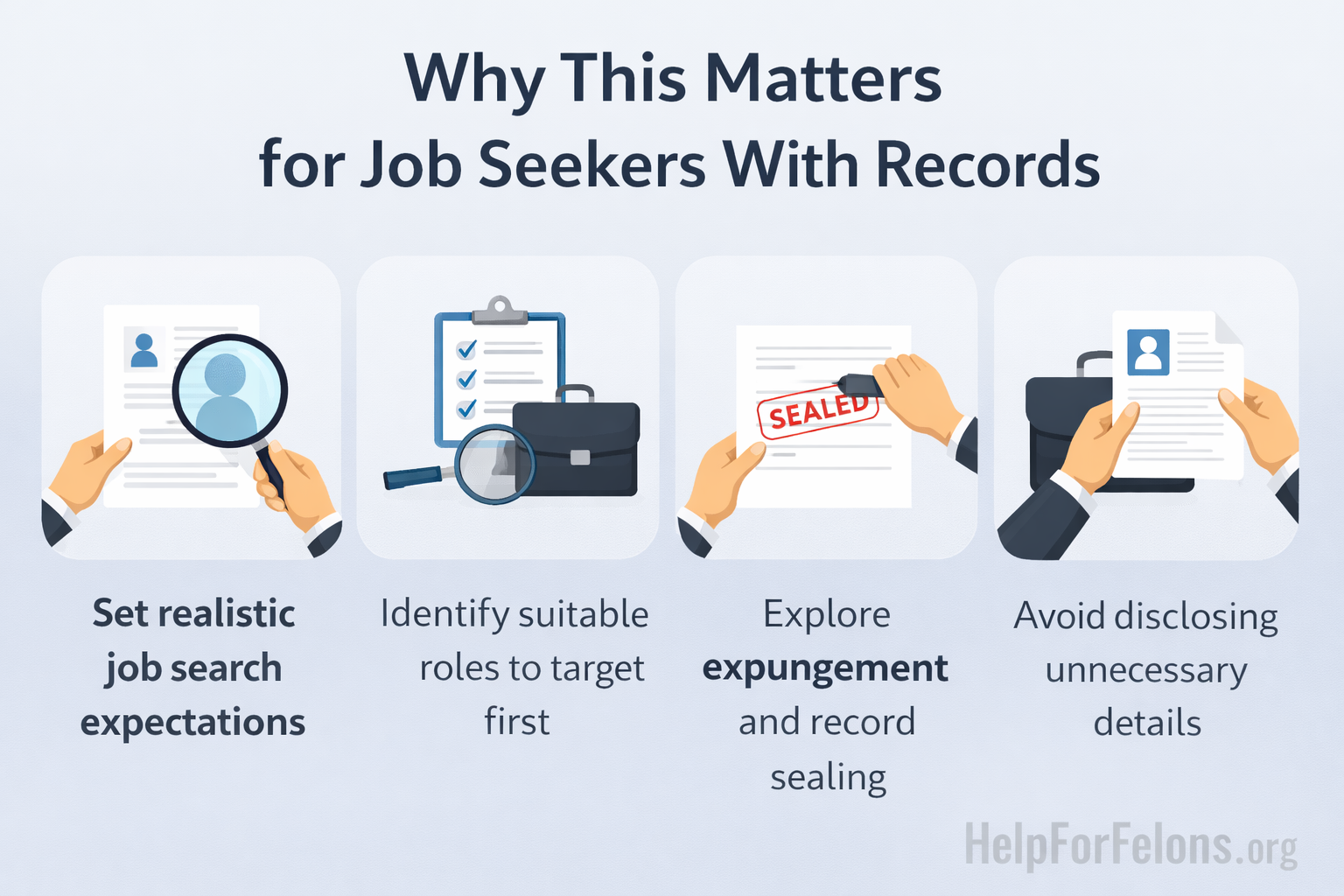
Understanding background check laws can help you understand when you should disclose that you have a felony and when you should not. Never voluntarily tell employers that you have a criminal record unless they specifically ask. The following may matter greatly when seeking employment:
- Applying for jobs in states that are “7 year states” may be a good work around for finding employment
- Choose job roles strategically, maybe remote positions in a different state would be best
- Know when expungement or sealing may help
- Avoid unnecessary disclosure to future or current employers
State laws can affect what appears on a report, but they do not guarantee hiring.
Disclaimer
This page is provided for general informational purposes only. Background check laws vary by state and are subject to change. Nothing on this page should be considered legal advice.