Last updated: March 20, 2026
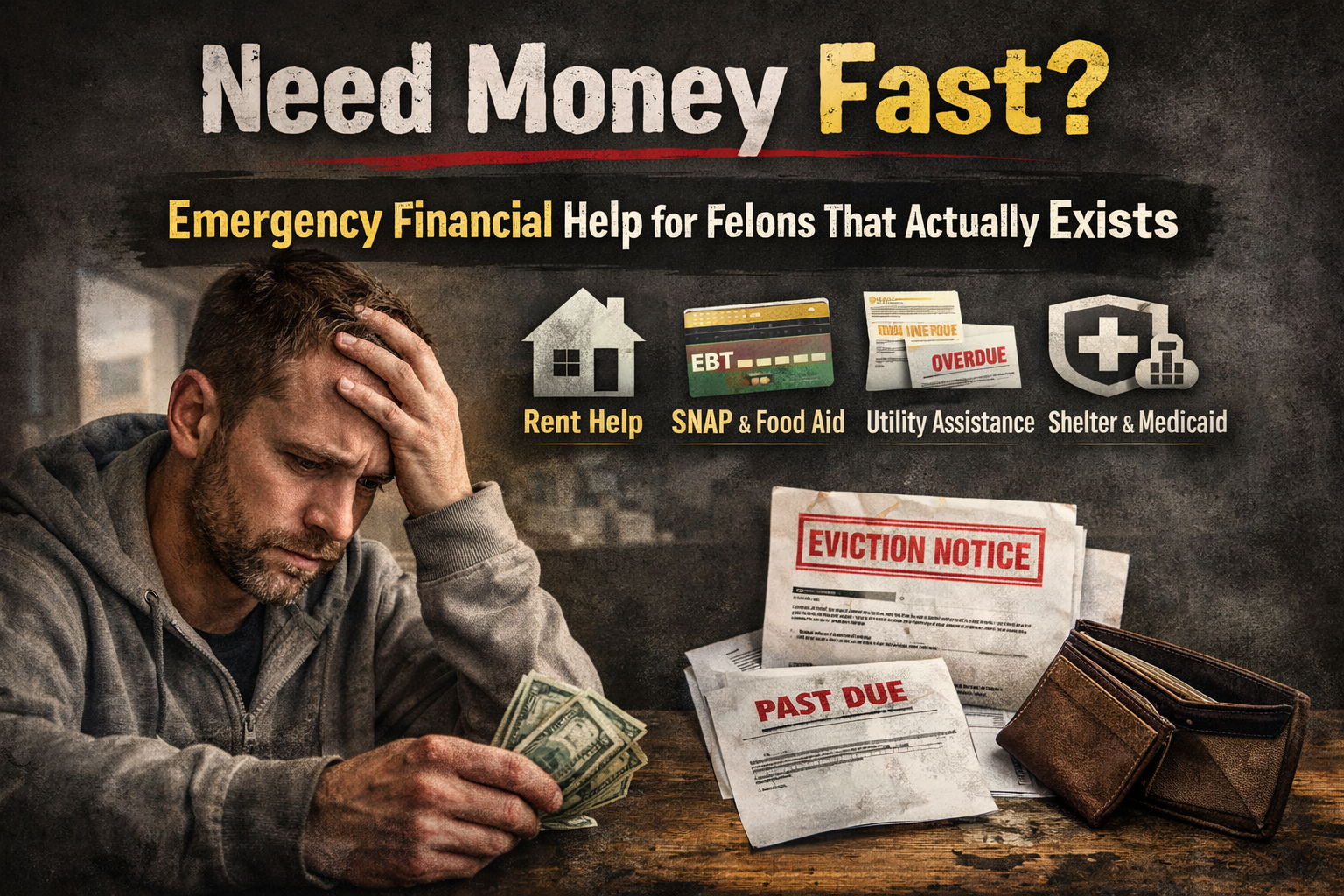
If you have a felony record and you are in a money crisis, the best help usually does not come from a special grant or program just for felons. Real emergency help usually comes from mainstream programs and local crisis networks that focus on food, rent, utilities, shelter, medical coverage, and basic survival.
Quick answer
Most people with felony records should start with these seven options:
- 211 for local rent help, utility help, food, shelters, transportation, and nonprofit referrals.
- SNAP for food, especially if you have little or no cash. Some households can get benefits quickly through expedited processing.
- Emergency housing and rent help through 211, local homeless service providers, and HUD shelter tools.
- LIHEAP if your heat or electric is at risk.
- TANF if you have children and need help with food, housing, home energy, child care, or related basics.
- Medicaid if you have no health coverage and low income. Rules vary by state, but income based eligibility is central.
- Lifeline if you are about to lose phone or internet service.
Keep reading for some detail information on all these programs and how/where to apply.
Who this page is for
This page is for people with felony records who need real emergency help now. If you are
- with no food money.
- behind on rent.
- facing shutoff notices.
- staying in a motel, on a couch, in a shelter, or in a car.
- Are a parent who needs cash or benefit support fast.
- Recently released and trying to stabilize.
The truth about felony records and emergency help
A felony record does not automatically disqualify you from most emergency help. Most major crisis programs are built around income, household size, housing risk, disability, age, pregnancy, veteran status, or whether children are involved. SNAP, LIHEAP, TANF, Medicaid, Lifeline, and many local nonprofit programs are mainly need based, though rules can vary by program and by state.
That does not mean every program is automatic. Some benefits have specific state rules, work rules, or special restrictions. The practical rule is simple: apply first and make the agency say no. Many people with records talk themselves out of help they actually could have received.
The Fastest Emergency Help Options For Felons
1. Call 211 first
211 is one of the best starting points because the fastest emergency help is often local, not national. 211 connects people to local referrals for rent, utilities, food, shelters, and other urgent services. It also helps you find programs that are actually taking applications in your county right now.
What to say:
I am in a financial emergency, and I need the fastest help available for rent, food, utilities, shelter, and any local cash assistance.
That keeps the call focused on speed instead of your backstory.
2. Apply for SNAP immediately
If food is the problem, SNAP (Food Stamps) is usually the first major program to pursue. USDA says eligible households must generally receive benefits within 30 days, and households that qualify for expedited service must be processed within seven days.
If you are homeless, do not assume SNAP is off limits. USDA states there is no requirement for a permanent address to be eligible for SNAP, and homeless households are specifically exempt from the normal residency verification standard. USDA also says some states operate a Restaurant Meals Program that allows eligible homeless, elderly, or disabled SNAP households to use benefits at approved restaurants.
What to say:
I need to apply for SNAP today. I have very little money for food and want to know if I qualify for expedited service.
3. Protect housing before you become homeless
If you are behind on rent, act before the situation gets worse. Call 211 for emergency rent help and emergency housing assistance because these programs are mostly handled at the state and local level. HUD also provides a shelter search tool for finding nearby housing, shelter, food, health care, and clothing resources.
Ask for all of these if housing is shaky:
- Emergency rent help.
- Homelessness prevention.
- Rapid rehousing.
- Shelter referral.
- Legal aid if you received a notice or court paper.
4. Stop the utility shutoff
If your heat or electric is about to be shut off, LIHEAP is one of the main programs to check. USAGov explains that LIHEAP can help with heating or cooling bills and emergency services during an energy crisis, with eligibility and procedures run by each state.
Do two things on the same day:
- Apply for LIHEAP or local crisis energy assistance.
- Call the utility company and ask about hardship plans, payment plans, and shutoff prevention options.
5. Use TANF if you have children
Temporary Assistance for Needy Families (TANF) is one of the few mainstream programs that can function as real cash type support for families with children. Official sources explain that TANF is a federally funded, state run program that can help with food, housing, home energy, and child care, and many states also connect it to job training or education support.
If you have kids, do not apply for TANF in isolation. Ask about TANF, SNAP, Medicaid, school meals, WIC, and child care help at the same time. WIC helps eligible women, infants, and young children with food, nutrition support, and social service referrals, and school meal programs can reduce pressure on your grocery budget fast.
6. Apply for Medicaid if you are uninsured
Medical bills can wreck a recovery plan fast. Medicaid is a major health coverage program, and official guidance shows that income based eligibility is central for many coverage groups, though the details vary by state.
Even if you think you will not qualify, apply or screen yourself. A lot of people with low income assume they are ineligible when they are not.
7. Keep your phone on
Phone service is not a luxury when you are job searching, trying to reach probation or parole, dealing with a landlord, taking calls from agencies, or waiting for interview appointments. USAGov explains that Lifeline is a federal program that helps eligible low income households get discounted phone or internet service.
8. Use legal aid when the problem is eviction, debt, or denial
Sometimes the most valuable emergency help is not cash. It is legal pressure on the person or company putting you in crisis. Check out Legal Services Corporation, federally funded programs and other legal aid directories for low and moderate income households. LSC says it funds legal aid organizations in every state, the District of Columbia, and U.S. territories, generally serving people with low incomes.
Legal aid can matter if:
- A landlord is pushing an eviction.
- A utility shutoff is happening fast.
- Debt collectors are taking action.
- A denial or paperwork issue is blocking benefits.
- You need help clearing a civil problem that is feeding the emergency.
9. Veterans should use veteran specific help
If you are a veteran, use veteran programs immediately. VA says its Health Care for Re entry Veterans program is designed to promote success and prevent homelessness among veterans returning home after incarceration. VA also operates homeless programs and a national call line for veterans facing homelessness or housing instability.
This is one of the clearest areas where a person with a record may have better support options than they realize.
10. Use Benefits.gov to find the full stack
Benefits.gov offers an official benefit finder tool that helps people screen for government benefits based on their situation. That makes it useful when your emergency is broader than one issue and you need to see the full picture, not just one program.
What To Do IN The First 24 Hours
If you need help fast, do this in order
- Call 211. Ask for food, rent, shelter, utilities, transportation, and local cash help.
- Apply for SNAP. Ask about expedited service.
- If housing is at risk, ask for emergency rent help and shelter options together.
- If utilities are in danger, apply for LIHEAP and call the utility provider.
- Apply for Medicaid if you are uninsured.
- If you have children, ask about TANF, WIC, school meals, and child care support.
- If you are a veteran, call VA homeless or reentry services the same day.
- If you have an eviction or civil legal notice, contact legal aid immediately.
What documents help most
Do not wait for perfect paperwork before asking for help. Start the application process anyway, then fill the gaps.
Try to gather the following documents:
- Photo ID.
- Social Security number if you have it.
- Lease, rent receipt, or written proof of where you stay.
- Eviction notice or shutoff notice if one exists.
- Pay stubs, benefit letters, or proof of zero income.
- Names and birth dates for everyone in your household.
- Bank balance information if requested.
- Any release, probation, parole, shelter, or case management paperwork that explains your situation.
The scams to avoid
Avoid websites, ads, or people promising free government money for felons, guaranteed approval, secret grant lists, or fast help for an upfront fee. Official government pages warn that claims about free money from the government are often scams.
The real pattern is simpler:
- Government benefits have public rules.
- Local nonprofits usually do not promise guaranteed approval.
- Real agencies do not need a mystery fee to unlock aid.
Emergency Financial Help for Felons FAQ
Yes, many can. Most emergency help programs focus on income, family situation, housing risk, disability, or veteran status rather than a felony record by itself. Rules vary by program and by state, but a record does not automatically shut the door.
Often yes. USDA says there is no requirement for a permanent address to be eligible for SNAP, and homeless households are exempt from the usual residency verification standard.
Use VA reentry and homeless services immediately. VA says its reentry program is designed to help veterans returning after incarceration succeed and avoid homelessness
Disclaimer
Help For Felons is not a government agency, lender, or benefit office. Program rules, approval standards, and availability vary by state, county, and provider. Having a felony record does not automatically disqualify you from most emergency assistance, but every program has its own requirements. Always verify details with the official agency or provider before applying or paying any fee.