
Last Updated on: April 14, 2026
The first few weeks after release are often the hardest part of reentry. Many things need to fall into place quickly to be successful.
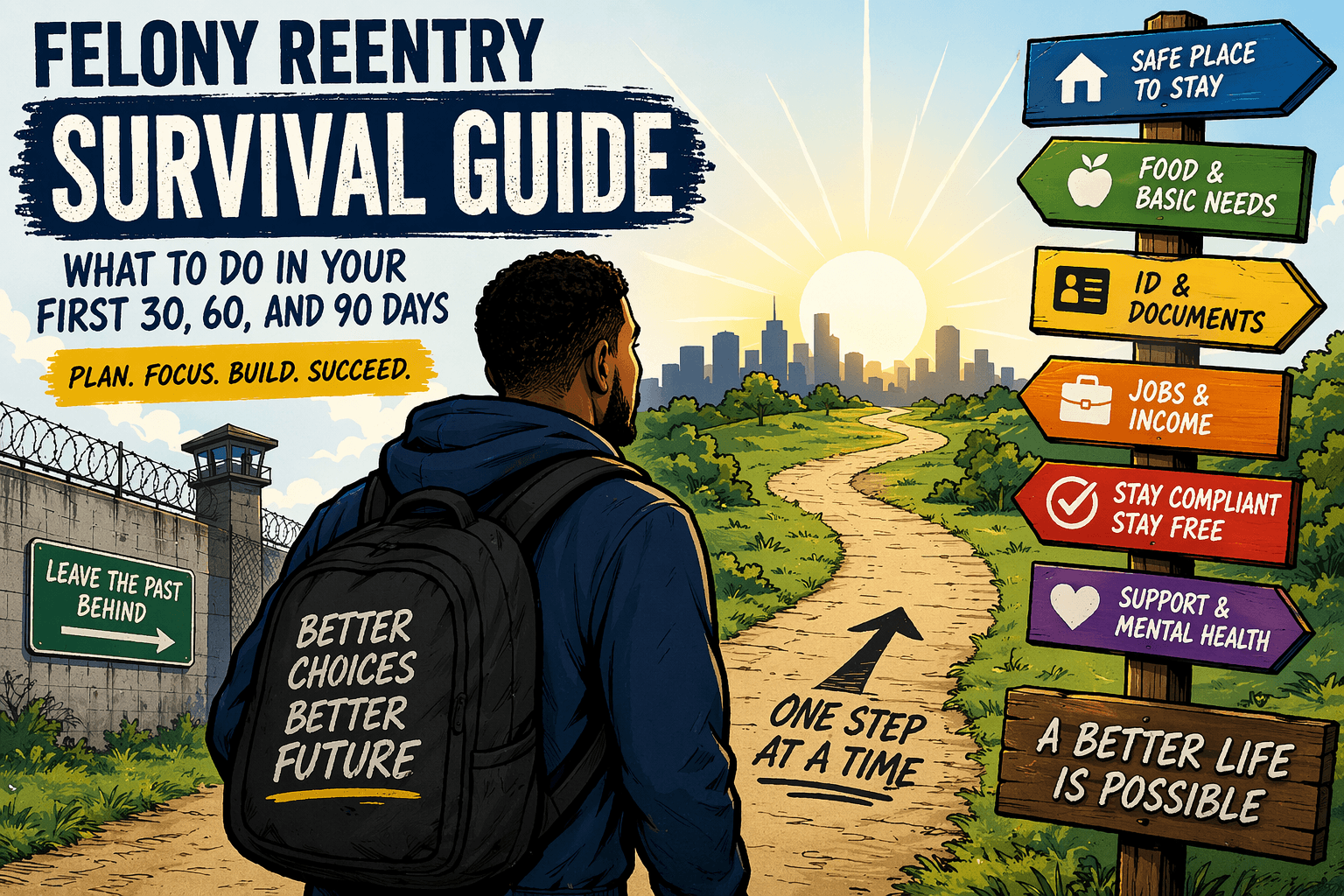
Reentry Survival Guide – What To Do in Your First 30, 60, and 90 Days
The biggest risks are homelessness, missing probation or parole requirements, losing contact with employers, running out of food or money, falling back in with the wrong people, and getting overwhelmed so fast that you shut down.
This guide is here to help you avoid those negative outcomes. If you want to leave your past in the past and move forward this is where you want to start.
Focus on one small step at a time. These will include the following;
- A safe place to sleep
- Food and water
- Phone access
- Probation or parole compliance
- ID and documents
- Transportation
- Income as soon as possible
You do not need to fix your whole life today. You do need to fix the most dangerous problems first.
Need help finding work fast?
Visit our jobs for felons information page to find employers, job ideas, and second chance work options.
Who This Guide Is For
This page is for people who:
- Just got out of jail or prison
- Are about to be released
- Have a felony record and are trying to get stable
- Feel overwhelmed and do not know what to do first
- Want real help, not empty advice
It is also useful for family members, case workers, and anyone trying to help someone get back on track.
What Commonly & Easily Goes Wrong After Release
A lot of people fail reentry because too many problems hit at once. One missed step can create a chain reaction.
| Problem | What it can lead to |
|---|---|
| No place to stay | Homelessness, unsafe situations, supervision trouble |
| Missing probation or parole rules | Violations, warrants, jail |
| No phone | Missed job calls, missed appointments, lost help |
| No ID | Trouble getting work, housing, benefits, bank access |
| No food or money | Desperation, bad choices, survival crime |
| Wrong people around you | Drugs, violence, re arrest, setbacks |
| No transportation | Missed work, missed meetings, lost opportunities |
| Giving up too fast | Long term instability |
The goal is simple. Reduce chaos quickly.
What To Do in Your First 72 Hours
These are your top priorities right after release.
1. Find a safe place to sleep
A safe place matters more than comfort. If your living situation puts you around drugs, crime, violence, or people who pressure you, that is not a safe place. It will come back to bite you at some point!
Best options:
- Trusted family
- Trusted friend with a stable home
- Halfway house
- Sober living
- Reentry housing program
- Public Housing
- Emergency shelter
Avoid places where:
- People are using drugs
- Crime is happening
- You could violate curfew or supervision
- Someone expects you to “help out” in illegal ways
2. Make sure you have food and water
Hunger creates panic. Panic creates bad decisions.
Start with whatever is available:
- Family support
- Food pantry
- Church meal programs
- Soup kitchens
- SNAP application
- Local emergency assistance
3. Learn your probation or parole rules immediately
If you are on supervision, do not guess.
You need to know:
- Who your officer is
- When you must report
- Curfew rules
- Drug testing rules
- Travel restrictions
- Work requirements
- Treatment requirements
- Fees or conditions
Write all of it down.
4. Get phone access
You do not need the newest phone. You need a working number that employers and officers can reach via voice and text.
A phone helps with:
- Job calls
- Housing leads
- Benefit applications
- Emergency help
- Appointment reminders
Lifeline is a discount and/or free phone program.
5. Protect your paperwork
Keep all important papers together.
That includes:
- Release paperwork
- ID
- Social Security card
- Birth certificate
- Court documents
- Medical papers
- Probation or parole instructions
- Job related records

What To Do in Your First 7 Days
Once basic survival is handled, your next goal is stability.
Get an ID or replace missing documents
Without ID, life gets harder fast.
Start working on:
- State ID or license
- Social Security card
- Birth certificate
Ask for help from:
- Reentry programs
- Probation or parole staff
- Legal aid
- County assistance office
- Workforce centers
Apply for basic help
This is what short term help is for. Use it to get stable, not to stay stuck.
Look into:
- SNAP
- Medicaid
- Emergency cash help, where available
- Transportation help
- Clothing closets
- Reentry programs
- Workforce programs
Build a simple routine
A unorganized day can turn into a bad day fast. A simple daily structure helps a lot.
| Time | Focus |
|---|---|
| Morning | Get up, clean up, eat, plan the day |
| Mid morning | Phone calls, paperwork, applications |
| Afternoon | Appointments, job search, transportation |
| Evening | Dinner, prepare for tomorrow, stay away from chaos |
You do not need a perfect routine. You need a repeatable one that keeps you focused on your future.
Start looking for work right away
Do not wait for the perfect job. Look for the fastest safe path to income.
Good starting points often include:
- Temp agencies
- Warehouses
- Restaurants
- Construction labor
- Landscaping
- Cleaning jobs
- Moving companies
- Manufacturing
See our Jobs and careers page for a ton of resources.
Stay away from the wrong people
One bad night can ruin months of work.
Avoid people who:
- Use drugs
- Push crime
- Laugh at your goals
- Create chaos
- Pressure you to break rules
Old “friends” often create old outcomes.
How to Earn Money Fast After a Felony
This page is for emergency cash needs, not long term career planning. Some options can put money in your hand today. Others may take a few days.
What To Do in Your First 30 Days
This stage is about building momentum.
Get income coming in
Your first job does not need to be your forever job. It needs to help you move forward.
What matters most at first:
- Showing up
- Getting paid
- Building a work history
- Learning how to handle stress
- Proving you are reliable
Create a basic budget
Even a small budget can protect you from chaos.
Put your money in this order:
- Housing
- Food
- Transportation
- Phone
- Supervision related costs
- Clothing and hygiene
- Small savings if possible
Avoid:
- Flexing with money
- Emotional spending
- Lending money you cannot afford to lose
- Taking on other people’s problems
Keep every appointment
Missed appointments become big problems fast.
Track:
- Probation or parole meetings
- Court dates
- Treatment or classes
- Job interviews
- Benefit appointments
- Housing meetings
- Medical visits
Use alarms, a notebook, or a wall calendar. Do not rely on memory alone.
Start handling old problems one by one
You may still have:
- Fines
- Fees
- Child support issues
- License problems
- Old debts
- Open legal questions
Make a list. Handle one thing at a time. Do not freeze just because the list is long.
What To Do in Days 30 Through 90
This is where you start rebuilding, not just surviving.
Improve your housing situation if needed
If your current place is unstable, look for better housing or an apartment.
A good place to live should be:
- Safe
- Legal under your supervision rules
- Reasonably close to work or transportation
- Free from chaos, drugs, and pressure
- Affordable
Improve your job situation
Once income is coming in, look for the next step. Maybe a better job or a higher paying job.
Ask:
- Can I get more hours?
- Can I move to a better shift?
- Can I learn a skill?
- Can I move into a better paying role?
- Can I work toward a trade or certification?
Rebuild trust slowly
People may not trust you right away. That is normal. You rebuild trust by doing small things consistently:
- Be on time
- Tell the truth
- Keep your word
- Stay calm
- Stop making excuses
- Follow through
- Keep showing up
Learn your long term legal options
Depending on your state and record, you may later qualify for:
- Expungement
- Seven Year States
- Set aside relief
- Pardon related relief
- Other record relief options
Do not assume your record can never improve. Learn what may be possible.
Want to see whether your record can be cleared later?
Learn how expungement, sealing, and record relief work in different states.
Reentry Checklist
Use this as a simple reset list.
| Task | Priority |
|---|---|
| Safe place to sleep | Urgent |
| Food access | Urgent |
| Phone number | Urgent |
| Probation or parole reporting | Urgent |
| ID or replacement documents | Urgent |
| Transportation plan | High |
| Job search started | High |
| Benefits applied for | High |
| Daily routine created | High |
| Budget started | Medium |
| Better housing plan | Medium |
| Long term legal relief research | Medium |
Best First Jobs To Target
The best first job is often the one you can get, keep, and build from later.
| Job Type | Why it can help |
|---|---|
| Temp agencies | Fast placements in some markets |
| Warehouses | Common openings and steady hours |
| Restaurants | Entry level back of house work is often available |
| Construction labor | Physical work with lower barriers in some cases |
| Landscaping | Fast seasonal hiring in many places |
| Cleaning | Commercial cleaning can be a practical start |
| Manufacturing | Repetitive but stable work |
| Moving companies | Hard work, but can be easier to enter quickly |
Some companies are easier to get hired by than others. Franchises are often the best option.
If you need a job fast check out these:
Find more felon friendly employers on our main jobs page.
What To Say About Your Record
Do not lie. But do not tell your entire life story either.
A better approach is:
- Take responsibility
- Keep it short
- Explain what is different now
- Bring the focus back to work
Example:
“I made mistakes in the past, and I have worked hard to move forward. I am focused on staying stable, working hard, and being reliable.”
When applying for jobs you need to know how to explain your criminal record to employers.
Mistakes That Can Destroy Reentry Fast
These mistakes create many of the worst outcomes after release.
Missing probation or parole requirements
This can lead to violations, warrants, and jail or prison.
Going back to old people and old habits
Familiar does not always mean safe.
Chasing quick money
Quick money often comes with long consequences.
Ignoring paperwork
One missed letter or deadline can create a major problem.
Waiting too long to look for work
The longer you wait, the more pressure builds.
Using drugs or alcohol to cope
Short term escape often causes long term damage.
Quitting after rejection
Rejection is normal. Keep going.
Need housing help too?
Stable housing is one of the biggest parts of successful reentry. Start with safe, legal, realistic options.
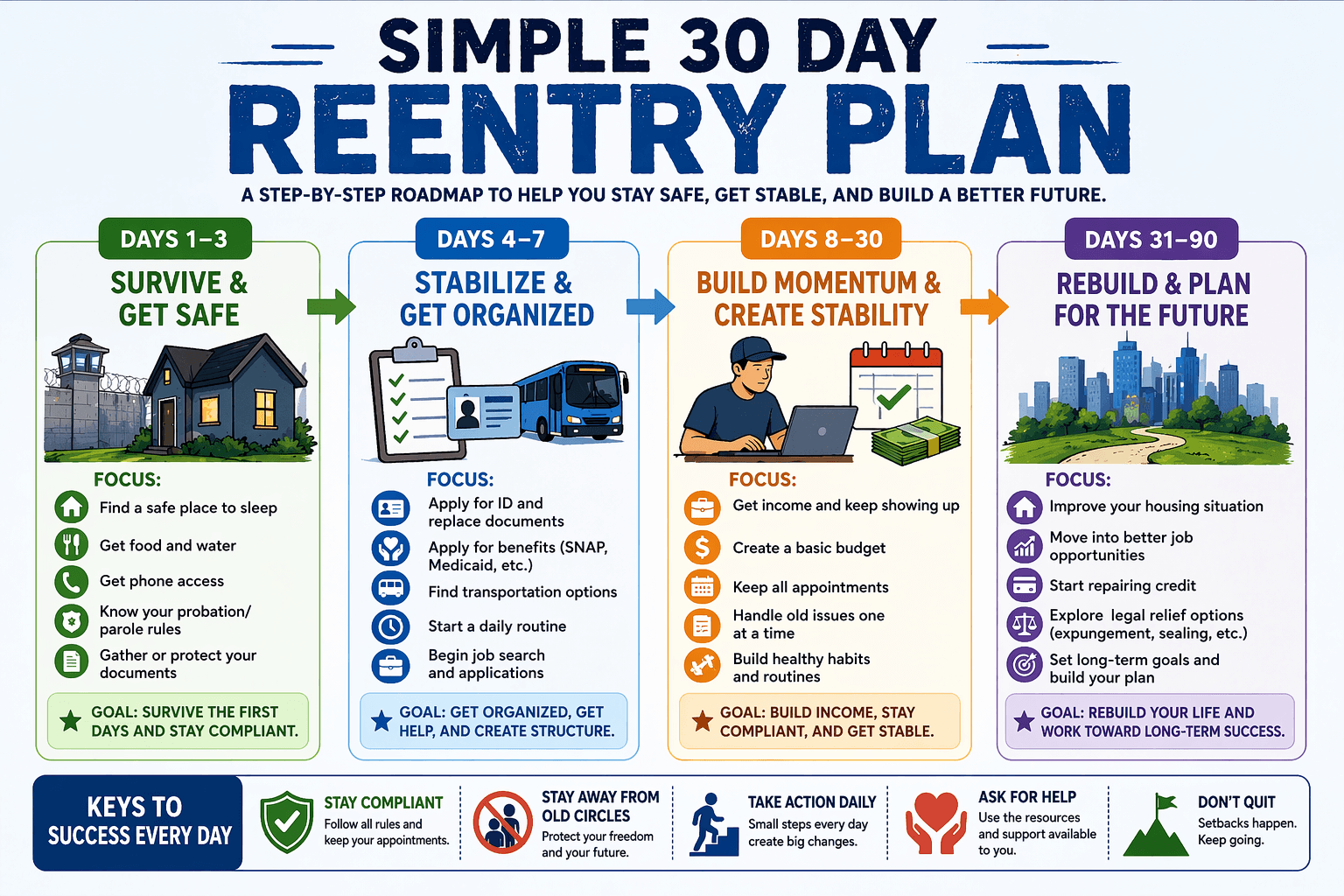
Simple 30 Day Reentry Plan
| Time Period | Main Goal |
|---|---|
| First 3 days | Safety, food, phone, compliance, documents |
| First 7 days | Benefits, routine, transportation, job search |
| First 30 days | Income, budget, compliance, stability |
| Days 30 through 90 | Better housing, better work, long term plan |
What Family Members Can Do That Actually Helps
Families can be a huge help, but only if they bring stability.
Helpful support:
- Offer a calm and safe place to stay
- Help with transportation
- Help organize documents
- Help with job searching
- Encourage structure and routine
- Set clear rules and expectations
Not helpful:
- Constant yelling about the past
- Giving money with no structure
- Allowing chaos in the home
- Expecting instant change
- Treating the person like they are hopeless
Remeber
Reentry is hard because everything hits at once. You may be dealing with housing, money, work, supervision, shame, stress, and pressure all at the same time. That is why the best approach is simple.
Do this first:
- Stay safe
- Stay compliant
- Stay fed
- Stay reachable
- Keep moving toward income
- Stay away from chaos
- Keep showing up
That is how people avoid the worst outcomes. That is how real second chances start.
Disclaimer
Resources, supervision rules, benefits, and record relief options vary by state and by case. Information on this page is for general educational purposes and is not legal advice.