
Last Updated on: March 26, 2026
Getting health insurance after release can feel confusing, especially if you do not have a job yet, do not have an address, or need medical care right away. The good news is that a felony conviction usually does not block you from getting health insurance. In most cases, the real issue is choosing the right option and applying as fast as possible.
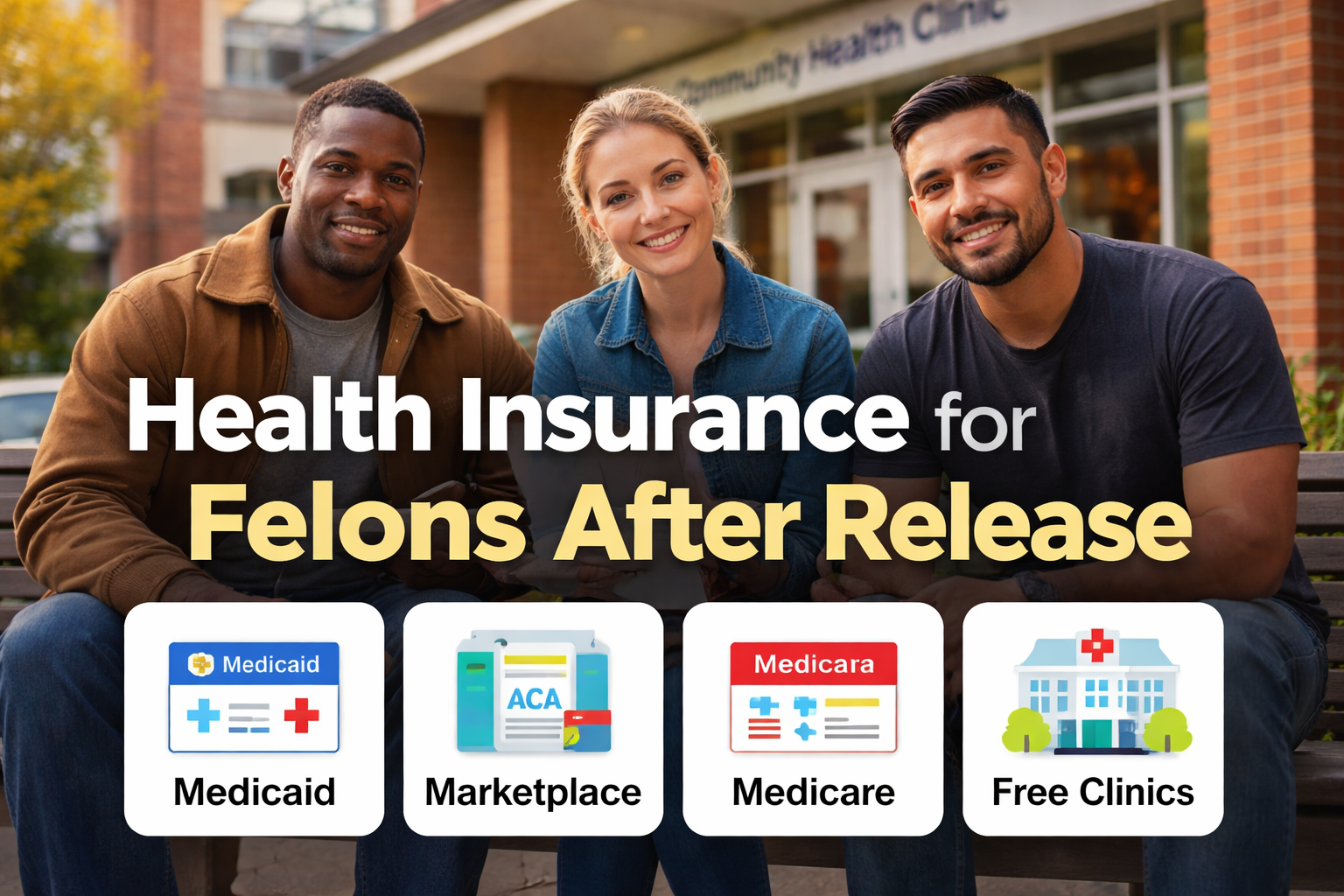
For most people leaving jail or prison, the best first option is Medicaid. If you do not qualify for Medicaid, the next place to check is the Health Insurance Marketplace. If you are age 65 or older, or qualify because of disability, Medicare may also be an option. If you need care immediately and have no coverage yet, a community health center or free clinic may help while you get enrolled.
Quick Answer
Yes. In most cases, a felony does not stop you from getting health insurance after release. You may qualify for Medicaid, Marketplace coverage, Medicare, or other low cost care depending on your income, age, disability status, and household situation.
People released from incarceration can also get a 60 day Special Enrollment Period to sign up for Marketplace coverage outside normal open enrollment.
Can Felons Get Health Insurance?
Yes. A criminal record usually does not disqualify someone from Medicaid, Medicare, private insurance, or Marketplace coverage. Insurance programs look at things like income, age, disability, tax household, and where you live. They do not usually deny coverage just because someone has a felony.
That means the better question is not “Can a felon get health insurance?” The better question is “Which type of coverage fits your situation right now?”
Best Health Insurance Options After Release
1. Medicaid
For many people leaving jail or prison, Medicaid is the best place to start. Medicaid is based mainly on income, and many people coming home qualify because they have little or no income at first. Healthcare.gov says Medicaid will not pay for most care while you are incarcerated, but if you qualify and enroll while still inside, you may be able to get care faster after release.
2. Marketplace coverage
If your income is too high for Medicaid, or your state rules make Medicaid unavailable to you, the Health Insurance Marketplace may be the next best option. After release, you get a 60 day Special Enrollment Period to apply for and choose a plan, even if it is outside the normal enrollment window.
3. Medicare
If you are age 65 or older, or qualify because of disability, Medicare may apply to you. Medicare eligibility can continue during incarceration, but Medicare generally will not pay for medical items and services while a person is in custody. There is also now a special enrollment period for certain people released on or after January 1, 2023.
4. Free and low cost clinics
If you need care right away and do not have insurance active yet, a community health center may help. HRSA says it funds about 1,400 health centers operating more than 16,200 service sites across all states, territories, and Washington, D.C. These centers are often one of the best short term options for primary care, prescriptions, and basic services when someone is uninsured.
Medicaid Is Usually the Best First Option
If you only remember one thing from this article, remember this: check Medicaid first.
Medicaid is often the best fit for people right after release because:
- It is based mainly on income.
- Many recently released people have little or no income.
- Some states let people start the application process before release.
- Getting approved faster can help prevent gaps in medication, treatment, and follow up care.
Healthcare.gov also explains that Medicaid will not pay for your care while you are in jail or prison, but enrolling before release may still help you get care more quickly once you are out.
Important Medicaid update
This is one of the biggest changes since your original page was published.
A CMS bulletin says that effective January 1, 2026, states must not terminate Medicaid eligibility for someone only because they are an inmate of a public institution. In plain English, that means the system is moving further toward suspension rather than full termination, which can make reactivation after release easier.
That does not mean Medicaid pays for normal prison or jail healthcare. Federal Medicaid funds still generally cannot be used for most services while someone is incarcerated, except in limited situations such as inpatient care in a medical institution.
Marketplace Insurance After Release
If you do not qualify for Medicaid, the Marketplace is often the next step.
Healthcare.gov says that once released from incarceration, you have a 60 day Special Enrollment Period to apply for and select a Marketplace plan. If your income qualifies, you may also get lower monthly premiums and lower out of pocket costs.
This matters because many people miss open enrollment and assume they have to wait months. In many cases, that is not true after release.
Important warning
If you do not choose a plan during that 60 day Special Enrollment Period, you usually will have to wait until the next open enrollment period unless you have another qualifying life event.
Can you join a spouse’s plan?
Yes, sometimes. Healthcare.gov says that if you plan to file taxes with a spouse or another household member who already has Marketplace coverage, they may be able to update their application and add you to their plan.
Medicare and Incarceration
Medicare can be confusing for older adults and people with disabilities who are in jail or prison.
Here is the simple version:
- Medicare eligibility can continue while you are incarcerated.
- Medicare generally does not pay for most care while you are in custody.
- If you missed enrollment because you were incarcerated, you may have a special chance to sign up after release.
Medicare’s January 2026 fact sheet says that if you were released from custody on or after January 1, 2023, you may have a Special Enrollment Period to sign up for Part A, Part B, or both without a late enrollment penalty. It says this enrollment window starts on the day you are released and lasts 12 full months.
The same fact sheet says you may choose coverage that starts:
- The first day of the month after you sign up, or
- Retroactively, up to 6 months back, but not before the month of release.
Retroactive coverage can help some people, but it can also mean you owe premiums back to that earlier start date.
What Happens While You Are Still Incarcerated?
This is where a lot of people get confused.
Medicaid
A person may still be eligible for Medicaid while incarcerated, but federal Medicaid funds generally cannot be used to pay for most services during incarceration. Some states help people apply before release, and some systems suspend existing coverage instead of fully ending it.
Marketplace plans
People serving a sentence in jail or prison are generally not eligible to enroll in Marketplace coverage while incarcerated. Once released, the 60 day Special Enrollment Period begins.
Medicare
A person can still be enrolled in Medicare while incarcerated, but Medicare generally will not pay for most services during that time.
What If You Need Medical Care Right Away?
A lot of people leaving jail or prison cannot wait weeks to see a doctor. They may need medication refills, mental health treatment, addiction treatment, wound care, blood pressure medicine, diabetes supplies, or help with a serious ongoing condition.
If that is your situation, do this right away:
- Check for a local HRSA funded health center.
- Ask whether they take uninsured patients.
- Ask whether they have a sliding fee scale.
- Ask for help applying for Medicaid or Marketplace coverage.
- Bring any release paperwork, ID, medication list, and prescription bottles you still have.
Community health centers can be one of the best bridge options when your insurance is not active yet.
How to Get Health Insurance After Release
Here is the process I would recommend for most people.
Step 1. Gather your documents
Try to gather:
- Photo ID
- Social Security number, if you know it
- Release paperwork
- Proof of address, if you have one
- Income information, even if income is zero
- Any medication list or medical paperwork
Do not panic if you do not have everything yet. You may still be able to start the process.
Step 2. Check Medicaid first
Go to your state Medicaid agency or start through Healthcare.gov. If your income is very low, Medicaid is usually the fastest and cheapest place to start.
Step 3. If Medicaid is not available, check the Marketplace
If you do not qualify for Medicaid, use the Marketplace Special Enrollment Period after release. You normally have 60 days from release to choose a plan.
Step 4. Check Medicare if age or disability applies
If you are old enough for Medicare or qualify through disability, check whether you can use the post incarceration Special Enrollment Period.
Step 5. Use a health center if care cannot wait
If you need care before insurance becomes active, find a local health center and ask for sliding fee care.
Common Problems After Release
No job yet
That may actually increase the chance that you qualify for Medicaid, since eligibility is often based on low income.
No address
You may still be able to start an application. If you are in a halfway house, treatment program, shelter, or living with family or friends, use the most stable mailing address you can legally use.
No ID yet
Start replacing it immediately, but do not assume you have to wait to ask for help. A navigator, health center, social worker, reentry program, or county assistance office may be able to tell you what they can accept while you are getting documents in order.
Need medication immediately
Do not wait for the perfect insurance setup. Go to a health center, urgent care, clinic, or discharge support contact and explain the situation. Bring old prescription bottles if you have them.
Missed the Marketplace deadline
If you missed the 60 day Special Enrollment Period after release, you may have to wait for open enrollment unless you have another qualifying event. That is why acting quickly matters.
The Old “Obama Care Fine” Warning Should Be Ignored
If you see older articles saying you will be fined federally for not having health insurance all year, that is outdated. The federal individual mandate tax penalty is no longer in effect. That old warning should not be part of this page anymore.
The Best Practical Advice
For most people, the smartest approach looks like this:
- Check Medicaid first
- Use the Marketplace if Medicaid does not fit
- Check Medicare if age or disability applies
- Use a community health center if you need care now
- Do not wait too long after release, especially if you may need the 60 day Marketplace window
Related Help for Felons
- Jobs for Felons
- Housing for Felons
- Reentry Programs
- CDL Jobs for Felons
- Felony Expungement
- Financial Help for Felons
Disclaimer
This page is for general informational purposes only and is not legal advice, medical advice, or insurance advice. Health coverage rules can vary by state and can change over time. Always confirm eligibility and enrollment details through your state Medicaid agency, Healthcare.gov, Medicare, or a qualified enrollment counselor.