
Last Updated on: 03/26/2026
Yes, some trucking companies do hire felons. But this is not a career where every company says yes, and it is not just about your conviction. In trucking, employers also care about your driving record, work history, whether you can pass the DOT physical, whether you need CDL training, and whether the job requires endorsements like hazmat.
That is why trucking can still be one of the best careers for people with records, but only if you approach it the right way.
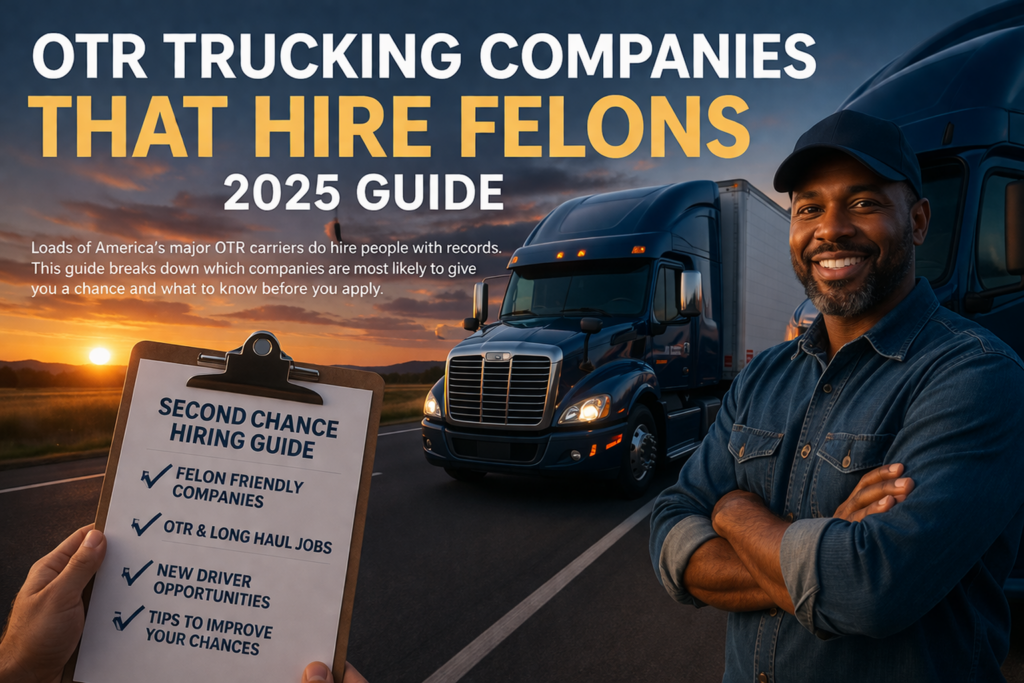
Quick Answer
Some trucking companies do hire felons, especially when the conviction is older, the offense was nonviolent, your driving record is clean, and you are honest during the hiring process.
Your odds are usually better if:
• your felony is several years old
• you have completed probation or parole
• you can pass the DOT physical
• you have a stable work history
• your motor vehicle record is clean
• you are applying for over the road work instead of more competitive local jobs
Your odds are usually worse if:
• the felony is very recent
• the offense involved theft, cargo, fraud, or violence
• you have DUI problems or multiple serious driving violations
• you cannot pass the DOT physical
• you need hazmat work
| Company | Likelihood to Hire Felons |
|---|---|
| Schneider | Yes, case by case |
| Marten Transport | Yes, case by case |
| Western Express | Likely yes |
| May Trucking Co. | Likely yes |
| CRST | Likely yes |
| Roehl Transport | Likely yes |
| C.R. England | Likely yes, but selective |
| Penske Logistics | Likely yes, case by case |
| Werner Enterprises | Likely yes, with limits |
| Crete Carrier | Possibly yes |
| Averitt Express | Possibly yes |
| Heartland Express | Possibly yes |
| Swift Transportation | Mixed to unclear |
| Landstar System | Mixed to unclear |
| P.A.M. Transport | Mixed to unclear |
Why Trucking Can Still Be a Strong Option for Felons
Truck driving is one of the few careers where people with records still have a realistic path into solid pay without a four year degree. That does not mean it is easy.It means this industry has a few things working in your favor:
• there is always demand for drivers
• many carriers hire across large regions, not just one small town
• some companies are open to trainees and new CDL holders
• some smaller or mid sized carriers use more case by case judgment
• the job often values reliability and safety more than a perfect past
For the right person, trucking can become a true reset career.
What Trucking Companies Care About Most
A felony matters, but it is rarely the only thing that decides whether you get hired.
1. Time since the conviction
The older the felony, the better your odds usually are. A conviction from 8 or 10 years ago is viewed very differently than one from last year.
2. Type of felony
This matters a lot. Some offenses create more concern than others. Harder cases often include:
• theft
• cargo theft
• robbery
• fraud
• identity crimes
• violent offenses
• serious drug trafficking cases
• repeated DUI related history
3. Driving record
In trucking, a bad driving record can hurt you as much as or more than a felony. Many employers will worry more about:
• recent DUI
• reckless driving
• too many moving violations
• license suspensions
• preventable accidents
4. CDL readiness
Can you legally and physically do the job? That means:
• valid license path
• ability to complete required training
• ability to pass the DOT medical exam
• ability to meet employer and insurer requirements
5. Work history
Employers want to know whether you show up, stay employed, and can be trusted with equipment and freight.
6. Honesty
This matters more than many people think. A company may still review a felony. Many will reject you fast for lying.
Federal Rules vs Company Hiring Rules
This part is important because many websites mix these up.
Federal and regulatory issues
These are the rules that can affect whether you can move forward at all.
FMCSA says entry level driver training applies to people getting a Class A or Class B CDL for the first time, upgrading from Class B to Class A, or getting a first time school bus, passenger, or hazmat endorsement. FMCSA also says driver applications must include 10 years of prior employment information, and carriers investigate safety performance history from the prior 3 years.
Company and insurance issues
These are not always written in law, but they still matter in real life. Companies and their insurers may say no because of:
• recent felony history
• theft or cargo related offenses
• violence related concerns
• recent DUI or unsafe driving history
• unstable work history
• very recent release
• no experience
• route type or customer restrictions
This is why two companies can look at the same person and make very different decisions.
Best Trucking Companies to Start With
These are not guarantees. They are better thought of as reported starting points for second chance applicants, especially compared with carriers that are known to be more restrictive.
| Company | Good fit for | Training Offered | Notes |
|---|---|---|---|
| Carolina Cargo | Harder background cases | No | Frequently mentioned in second chance discussions |
| PTL, Paschall Truck Lines | Newer drivers, case by case review | Sometimes | Often discussed as more open than many large carriers |
| Roehl Transport | People who need a training path | Yes | Strong beginner appeal |
| Western Express | Harder backgrounds, new drivers | Varies | Common second chance name in trucking |
| Prime Inc. | Trainees and apprentice path | Yes | |
| Werner | Case by case applicants | Yes | Big carrier, policies may vary by situation |
| Schneider | Case by case applicants | Yes | Better viewed as a possible option, not a guaranteed yes |
| Millis Transfer | Training route | Yes | |
| FFE | Training route | Yes |
Better options if you have a felony and also need CDL training
• Roehl Transport
• Prime Inc.
• Millis Transfer
• FFE
• Swift, depending on current program availability
• CR England, depending on current requirements
Better options if your felony is older
If your conviction is 7 years old to 10 years old, your options usually expand. Older convictions, especially nonviolent ones, are easier to explain and easier for employers and insurers to accept.
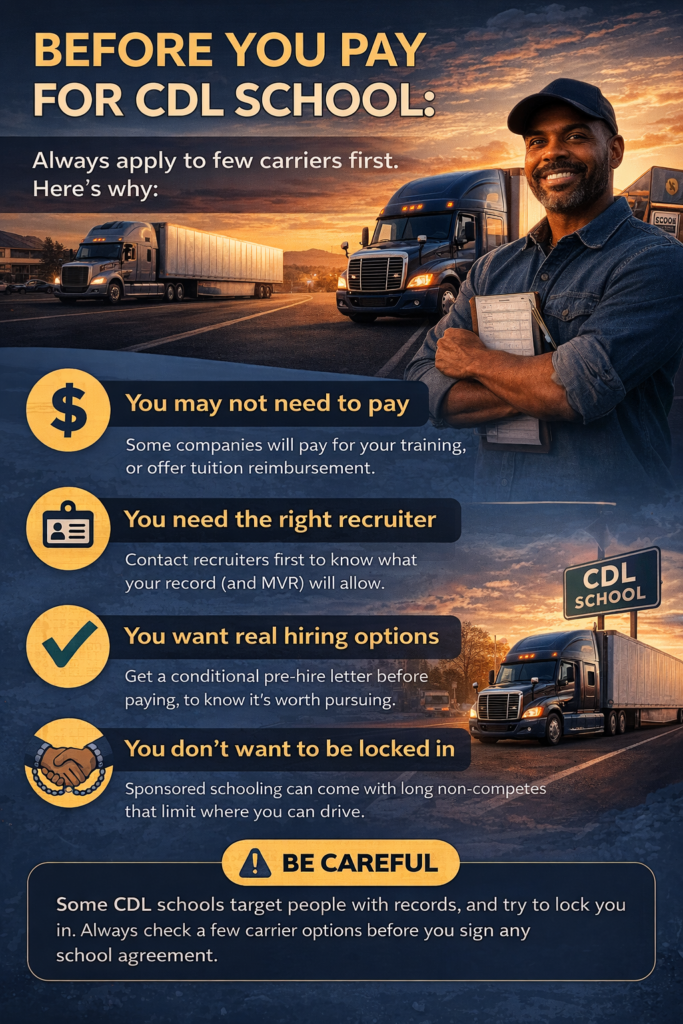
Before You Pay for CDL School
A lot of people with records make the same mistake. They spend money on CDL school first, then find out their background or driving record shuts doors they did not expect.
Do this first.
Ask these questions before paying for training
• Will you consider applicants with my exact type of felony?
• How many years since conviction or release do you require?
• Do you hire new CDL graduates?
• Do you offer paid training or sponsored training?
• Do you hire for over the road only, or local too?
• Will my driving record be a bigger problem than my felony?
• Do you hire for positions that do not require hazmat?
• Does parole or probation status matter?
• Will you review me case by case?
Documents to gather first
• driver’s license
• motor vehicle record
• conviction details
• proof of sentence completion
• employment history
• references if you have them
• DOT medical information if applicable
The smart move
Call multiple recruiters and keep notes in a simple spreadsheet before you spend a dollar on CDL driving school.
What Can Disqualify You
Some people with felonies can absolutely become truck drivers. Some cannot, at least not right away.
Common deal breakers can include:
• serious CDL disqualifying offenses
• inability to pass the DOT physical
• recent DUI or repeated unsafe driving
• theft or cargo related offenses for certain carriers
• unresolved drug and alcohol issues
• hazmat disqualifiers
• lying on applications
The key point is this:A felony alone does not always end your trucking chances. But a felony plus a bad driving record, recent DUI, failed medical exam, or hazmat restriction can make the path much harder.
Options for older convictions, around 10 years old or more
These may be worth checking when the felony is older and the rest of your record is solid.
• Swift Transportation
• J.B. Hunt
• Shaffer Trucking
• Crete Carrier
• CR England
• Dutch Maid Logistics
• Hunt Transportation
• JBS Carriers
Reported case by case options
• Werner
• Navajo Express
• Schneider
• Prime Inc.
• USA Truck
• Maverick Transportation
• US Xpress
• Tyson Foods
• Covenant Transport
• Cardinal Logistics
• Hirschbach
• J and R Schugel
Important note: These are not promises, and policies can change. The point of this section is to give readers a shortlist of companies to research first, not false certainty.
Why Some People Fail Even When Trucking Companies “Hire Felons”
A company might say they hire felons, but that still does not mean you get the job. People often get rejected because of:
• recent conviction
• poor driving record
• no stable work history
• failed DOT physical
• recruiter says maybe, insurer says no
• offense type conflicts with customer freight or route
• weak interview or bad explanation of past history
That is why you should treat this process like targeted job hunting, not wishful thinking.
Industry Insight
A lot of second chance applicants focus only on the felony and forget the bigger picture. In trucking, this is usually the real order of concern:
- safety
- driving record
- insurability
- reliability
- felony history
That is good news in one way. It means you still have a chance if you can show you are safe, stable, and serious.
Denial Strategy
If a company says no, do not quit. Do this instead:
• ask whether the denial was because of the felony, the driving record, or no experience
• ask whether you can reapply later
• ask what amount of time would improve your chances
• move to the next company quickly
• target more over the road carriers
• keep building work history and a clean record
One denial in trucking means very little by itself.
Related Pages
- How to Become a Truck Driver With a Felony
- Can a Felon Get a CDL
- DOT Medical Exam guide
- Jobs for Felons
- High Paying Careers for Felons
- Background Check Laws Overview
- Felony Expungement Info
- Financial Help For Felons
Disclaimer
Hiring policies vary by company and change over time. Information on this page is based on reported hiring patterns, industry practices, and publicly available information, and it is not a guarantee of employment. Nothing on this site should be considered legal advice.