
Last Updated on: March 25, 2026
Yes, a felon can become a truck driver in many cases. But that does not mean every company will hire you, every felony will be treated the same, or every trucking path is worth your time and money.
The trucking industry can still be a realistic career path for some people with a criminal record. The key is knowing what can block you before you pay for CDL school, test for endorsements, or spend months chasing the wrong companies.
This page is your starting point. It will help you understand the big picture, avoid expensive mistakes, and find the next guide you need.
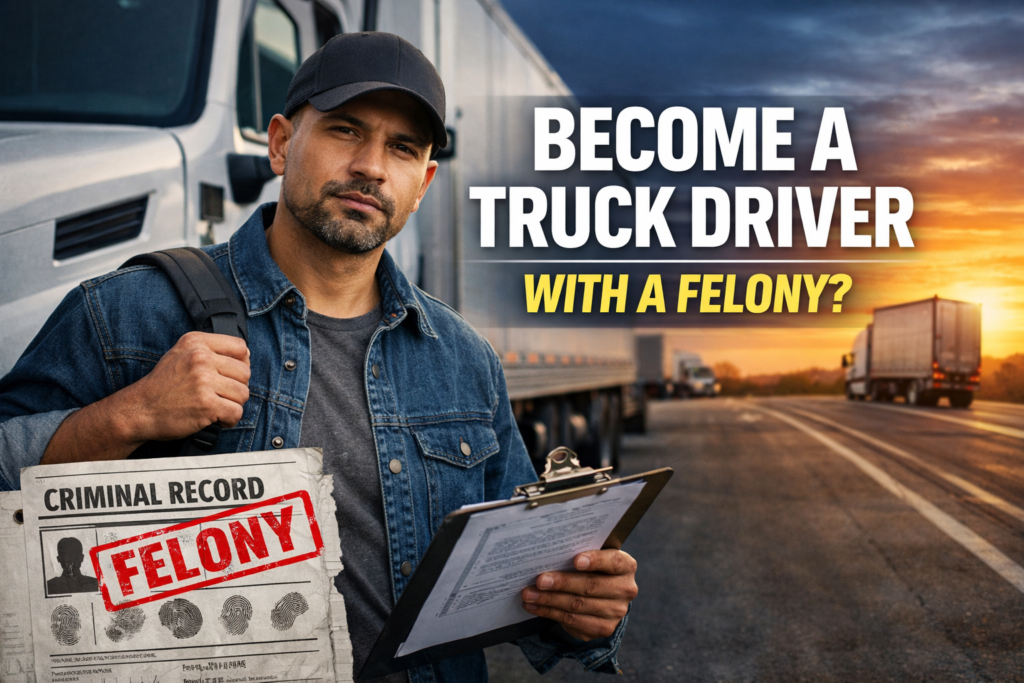
Quick Answer
Yes, many felons can become truck drivers. But your chances usually depend on things like:
- the type of felony
- how long ago it happened
- whether you completed probation or parole
- whether the job involves extra endorsements or restricted freight
- the hiring rules of the trucking company
Some people with felony records do get their CDL and build a solid trucking career. Others spend money on school too early, then find out their record creates hiring problems they did not understand. That is the mistake you want to avoid.
Who This Page Is For
This page is for you if you are trying to figure out:
- whether trucking is even realistic with your record
- whether you should get a CDL
- whether truck driving school is worth paying for
- which trucking jobs may be more realistic
- which related pages on this site you should read next
The Biggest Mistake People Make
The biggest mistake is paying for truck driving school before understanding whether employers are likely to hire you. A CDL by itself does not guarantee a job.
Some people assume that if they can legally get a CDL, they will automatically be able to find work. That is not always true. Many companies have their own background rules, insurance restrictions, safety policies, and internal hiring standards.
That means you should look at this career in the right order:
- Understand your record honestly.
- Learn whether your CDL path is realistic.
- Learn which companies and job types may be more open.
- Only then decide whether school is worth the cost.
Start Here: Choose the Right Path
What you need to know to become a truck driver.
1. How to Become a Truck Driver With a Felony
If you are still at the very beginning, start here. Start here if you want the full step by step path from planning to job search.
2. Can You Get a CDL With a Felony?
Many felons can get a CDL, but not every situation is the same. Read this first if your main question is whether you can legally qualify for a CDL.
3. Trucking Companies That Hire Felons
Information about trucking companies felon policies, who hires and more. Read this if you already know trucking is your goal and want to focus on employers.
What Can Make Trucking Harder With a Felony
Not all felony records are treated the same. Some are more likely to create hiring issues than others. Common factors that can hurt your chances include:
- recent convictions
- violent felonies
- theft or fraud related offenses
- drug trafficking convictions
- active probation or parole restrictions
- poor driving history on top of a criminal record
- gaps in work history with no explanation
This does not mean trucking is impossible. It means you need to be realistic about where you apply and how you plan your path.
Why Trucking Still Appeals to Many Felons
Despite the barriers, trucking remains attractive for a reason. It can offer:
- a career path without a college degree
- income that can grow with experience
- demand in many parts of the country
- opportunities with smaller or less rigid employers
- a chance to build stable work history
For some people, trucking is one of the more realistic career paths after a felony because it values reliability, safety, showing up, and staying employed over a polished background.
Important Reality Check
Getting a CDL and getting hired are not the same thing. A person can be legally eligible to train, test, or hold a CDL and still run into hiring trouble because of company policy, cargo restrictions, insurance standards, or background concerns.
Best Trucking Paths to Explore
Some trucking paths may be more realistic than others depending on your record, your location, and your experience.
Potential paths to explore include:
- over the road trucking
- regional routes
- smaller carriers
- warehouse to driver career progression
- non hazmat driving roles
Some of these may be easier to break into than local day route jobs or specialty freight positions.
Before You Pay for School
This is very important!
Warning
Do not assume that paying for CDL school means you will get hired afterward.
Before spending money, ask:
- Do companies in my area hire people with my type of record?
- How long do they usually want since conviction or release?
- Will my record create insurance issues?
- Does this school have real employer relationships?
- Are they being honest, or just trying to enroll me?
Related Job and Legal Guides for Felons
Good related internal links here could include:
- High Paying Jobs For Felons
- Jobs for Felons
- Temp Agencies That Hire Felons
- Felony Expungement
- Background Check Laws Overview
That last one is especially useful because background checks and reporting practices can vary depending on the employer and the state.
Remember
Trucking can be a real opportunity for some people with felony records, but it is not automatic and it is not risk free.
The smartest move is to understand the process in the right order. Learn the rules. Learn the risks. Learn which employers and training paths are more realistic. Then make your move with open eyes.
If you do that, you can avoid wasting money and give yourself a better shot at building a stable career.
Disclaimer
Hiring policies vary by company and can change over time. Information on this page is based on general industry patterns and publicly available information and is not a guarantee of employment. Nothing on this site should be considered legal advice.